
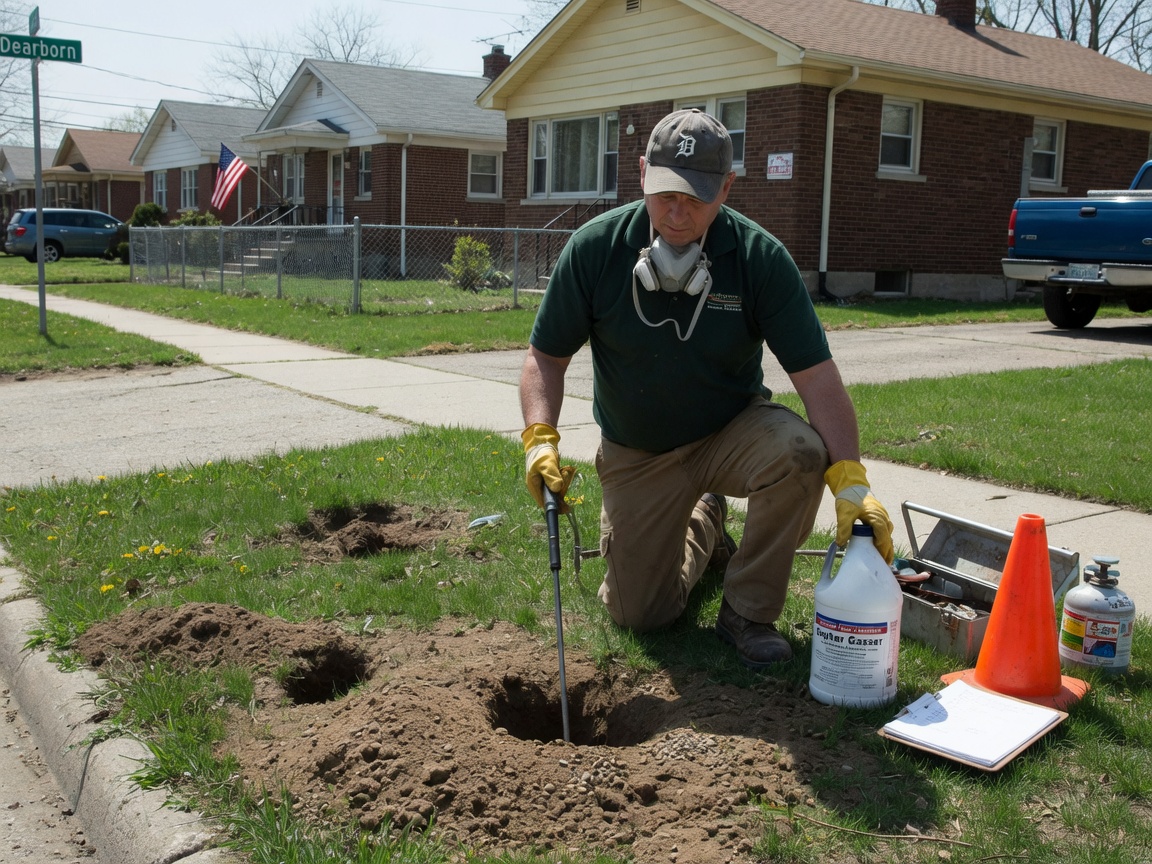
Dearborn's older housing stock in West Dearborn and East Dearborn features established lawns on clay and sandy loam soils that pocket gophers favor for easy tunneling. Cold snowy winters push gophers deeper while warm summers trigger surface mounds that damage turf and irrigation lines near homes bordering Greenfield Village and the Arab American National Museum. Effective control requires mapping active burrows rather than blanket treatments because gophers quickly seal off unused tunnels.
Wayne County properties near Taylor and Detroit often sit on lots with mature trees and garden beds where gophers follow root systems for food. Standard rodenticides lose potency in heavy spring rains common to the humid continental climate, so technicians rely on hand-placed baits inside main runways and mechanical traps set at fresh mounds. Homeowners who attempt over-the-counter products usually miss the primary burrow and see new damage within days.
Gopher work in Fordson neighborhoods demands caution around underground utilities and older sewer lines that run close to foundations. A single untreated colony can expand across adjacent yards because gophers travel up to 200 feet in search of new forage. Follow-up visits spaced two weeks apart confirm trap success and close any secondary entrances before the next warm spell reactivates activity.
Technician insight
In Dearborn the thing that catches most people out with gopher work is the heavy clay soil around older brick homes in East Dearborn; it holds tunnels longer after rain so fresh mounds appear even after you think the colony is gone, forcing an extra probe pass that suburban treatments often skip.
Fordson back yard mounds
A homeowner in Fordson noticed fresh dirt piles after spring thaw near the Henry Ford Museum boundary. Probing showed two main runways crossing under a fence line into the neighbor's lawn. Traps were set in the primary tunnels and checked after three days; both gophers were removed and secondary entrances were packed before the next warm front.
Gopher Exterminator Services We Offer
✓Pocket Gopher Trapping
Placement of mechanical traps in active main runways to remove breeding adults without surface residue.
✓Gopher Bait Application
Hand insertion of targeted bait into active tunnels using probe rods to reach foraging gophers.
✓Burrow Mapping and Inspection
Systematic probing to locate main tunnels and distinguish gopher activity from mole runs on Dearborn lots.
✓Lawn Damage Assessment
Evaluation of mound patterns and root damage to recommend repair steps after gopher removal.
✓Preventive Burrow Barriers
Installation of underground mesh or gravel barriers along garden edges and foundation perimeters.
Gopher Exterminator Cost in Dearborn, MI
| Service | Typical Range | What Affects It |
|---|---|---|
| Single yard trapping visit | $175–$325 | Depends on number of active mounds and lot size |
| Follow-up inspection | $75–$125 | Included when scheduled within two weeks |
| Barrier installation per linear foot | $8–$14 | Higher near irrigation lines or mature trees |
| Whole-yard mapping only | $100–$150 | For homeowners planning DIY follow-through |
Ranges are typical for Dearborn, MI and confirmed with an exact written quote before any work starts.
How it works
- 1
Initial Site Walk
Technician inspects mounds and probes for active tunnels across the yard in West Dearborn or East Dearborn.
- 2
Burrow Mapping
Main runways are flagged and distinguished from mole hills before any treatment begins.
- 3
Trapping or Baiting
Mechanical traps or targeted bait are placed directly in active tunnels based on soil and weather conditions.
- 4
Follow-Up Check
Return visit confirms removal and seals secondary entrances before new activity restarts in warm weather.
Pricing
Most gopher jobs in Dearborn fall between initial visit and one follow-up; larger corner lots near Fordson require extra time.