
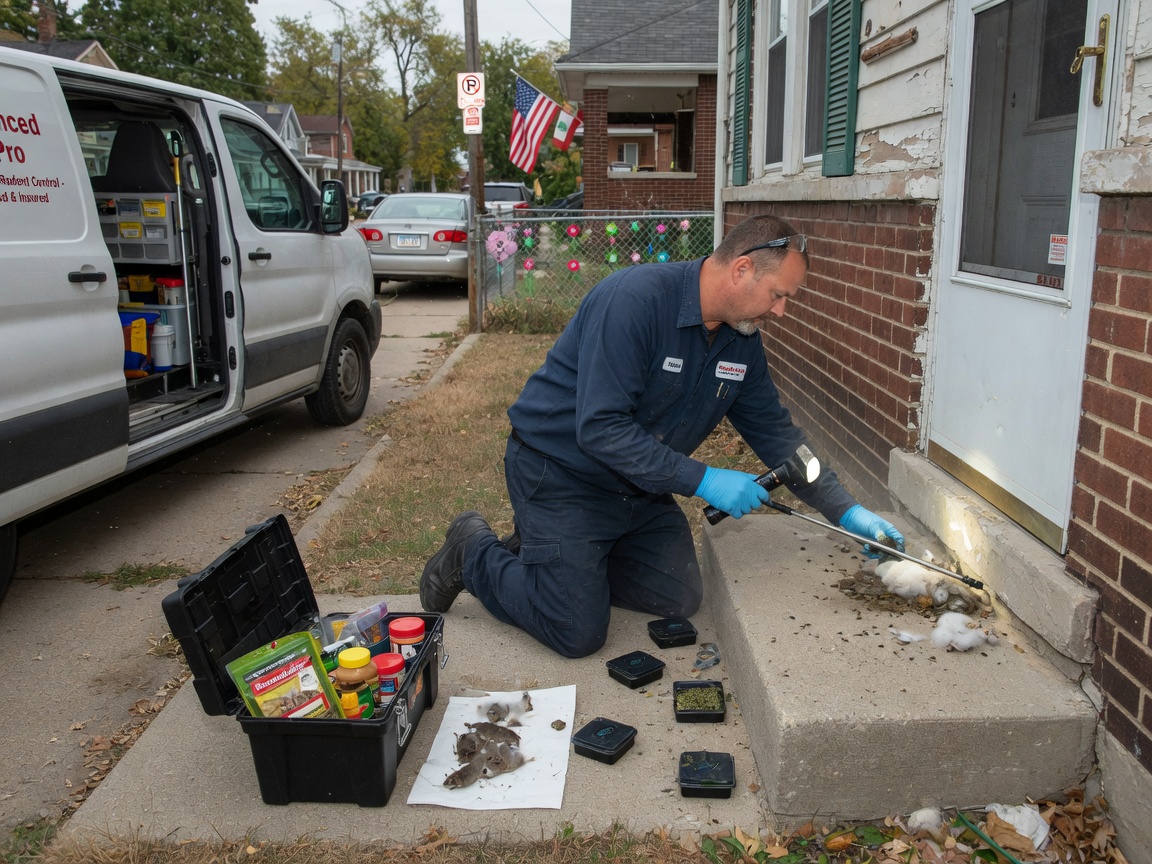
Dearborn's older brick and frame homes in East Dearborn and Fordson often have gaps around utility lines and foundation cracks that mice exploit once winter temperatures drop below freezing. Technicians focus on identifying these entry points during inspections rather than relying solely on bait stations, because the area's humid continental climate lets mice stay active in basements and crawl spaces through much of the snowy season.
In West Dearborn neighborhoods close to The Henry Ford complex, mice frequently travel along fence lines and garages attached to single-family homes. Exclusion work uses steel wool and metal flashing at these points because rodents chew through common foam sealants in a single season. Follow-up visits check for new activity near the Arab American National Museum corridor where commercial properties back up to residential blocks.
Warm summers in Wayne County increase outdoor food sources near Detroit and Taylor borders, so interior trapping must be paired with perimeter checks. Technicians avoid over-baiting in kitchens and pantries to prevent secondary issues with non-target animals common in dense Dearborn blocks.
Homes near Greenfield Village often sit on slightly raised lots with older sewer connections that create hidden runways. Sealing these requires removing loose soil and installing metal plates rather than caulk alone.
Technician insight
In Dearborn the thing that catches most people out with mouse work is the old brick foundations in East Dearborn and Fordson homes that shift slightly each winter, reopening gaps right after we seal them. Cold snowy weather drives mice inside fast, but the real repeat problem comes from homeowners caulking over those moving cracks instead of using metal.
Fordson garage entry
Mice were entering a 1920s home through a rotted sill plate under the attached garage. Inspection found runways along the foundation wall shared with the neighbor. We installed metal flashing and set traps in the basement; activity stopped after the second visit.
Mouse Exterminator Services We Offer
✓Attic Mouse Removal
Locate and clear mouse nests in Dearborn attics where insulation gaps allow entry from rooflines common in Fordson homes.
✓Basement Rodent Exclusion
Seal foundation cracks and utility penetrations in older Wayne County basements that mice use during cold winters.
✓Kitchen and Pantry Trapping
Place targeted traps and remove food sources in Dearborn kitchens without relying on broadcast bait near family living areas.
✓Garage and Shed Sealing
Block entry points along garage doors and shed foundations typical of West Dearborn single-family properties.
✓Crawl Space Treatment
Address moisture-driven mouse activity in crawl spaces under East Dearborn homes built before modern vapor barriers.
Mouse Exterminator Cost in Dearborn, MI
| Service | Typical Range | What Affects It |
|---|---|---|
| Initial mouse inspection and trapping setup | $175–$325 | Higher when attics or crawl spaces require extra time in older East Dearborn homes. |
| Full exclusion sealing package | $250–$450 | Varies with number of foundation gaps and garage doors typical in Fordson blocks. |
| Follow-up visit and reset | $75–$125 | Included in most initial packages but charged separately for repeat calls. |
Ranges are typical for Dearborn, MI and confirmed with an exact written quote before any work starts.
How it works
- 1
Detailed Inspection
Check all potential entry points around foundations, utility lines, and roof edges in the specific Dearborn neighborhood.
- 2
Targeted Trapping
Set snap traps and bait stations only in active runways rather than blanket placement throughout the home.
- 3
Exclusion Work
Install metal and steel wool barriers at identified gaps to prevent re-entry once mice are removed.
- 4
Follow-Up Visits
Return after seven to ten days to reset traps and confirm no new activity before final clearance.
Pricing
Cost depends on home size, number of entry points, and whether attic or crawl space access is needed.