
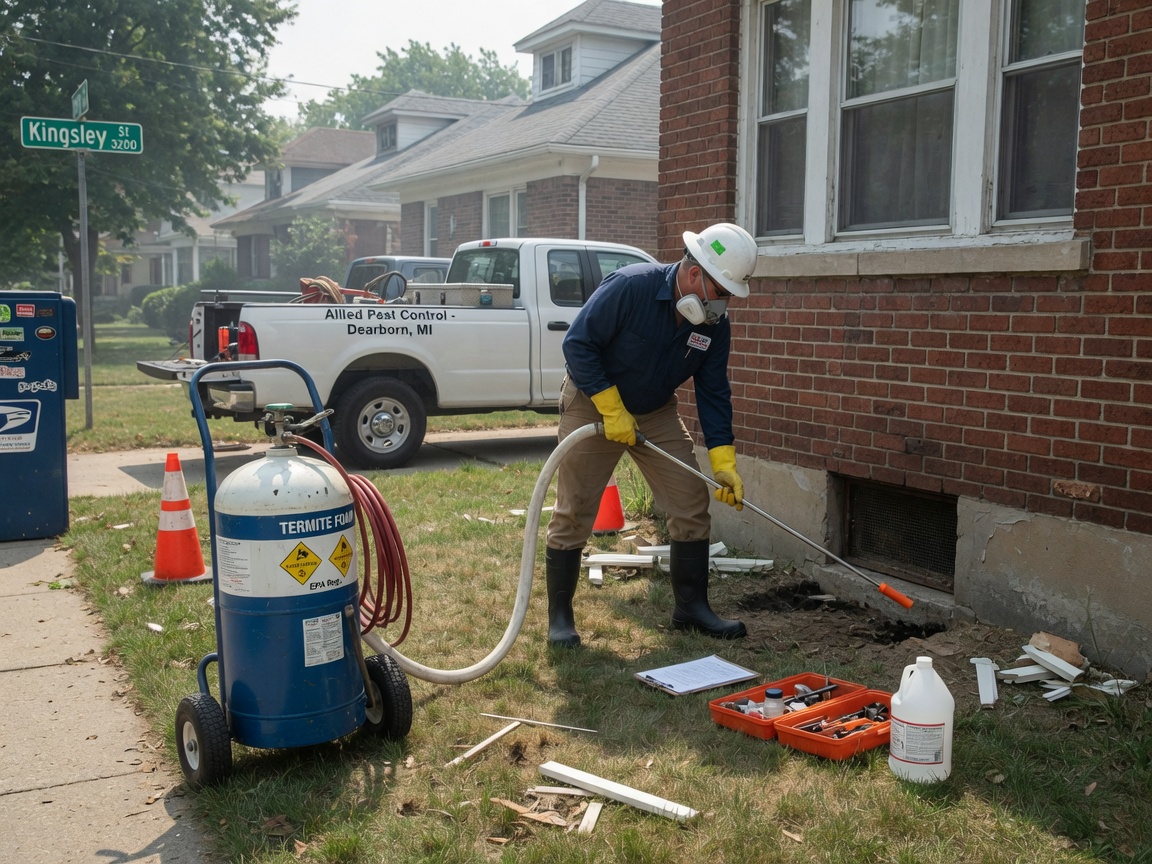
Dearborn's older homes in Fordson and East Dearborn often sit on clay-heavy Wayne County soils that retain moisture after spring snowmelt. This creates ideal conditions for subterranean termites to enter through foundation cracks or utility penetrations. Treatments must account for the shift from cold winters that pause activity to warm humid summers when colonies expand quickly toward the Henry Ford Museum area and surrounding neighborhoods.
Standard liquid barriers work in many West Dearborn properties but fail when slab foundations hide foraging tubes. Bait systems placed in the soil perimeter interrupt colony feeding without disturbing landscaping around The Henry Ford complex. Technicians check for drywood termites in attics of pre-1960s homes where poor ventilation traps summer humidity from nearby Detroit.
Inspections focus on crawl spaces and basement rim joists where melting snow creates hidden damp zones. Homeowners in Taylor-adjacent blocks frequently overlook mud tubes along concrete walls until structural damage appears. Follow-up visits confirm colony elimination before the next warm season restarts activity.
Local code requires proper notification for treatments near shared property lines in dense Fordson blocks. Technicians document soil type and moisture levels to select the right product and avoid over-application in sandy pockets near Greenfield Village.
Technician insight
In Dearborn the thing that catches most people out with termite work is how snowmelt in late winter keeps clay soils wet right up against older basement walls in Fordson and East Dearborn. Homeowners seal the visible cracks but miss the hidden rim joist entry points that stay damp through spring.
Fordson Basement Tubes After Thaw
Homeowner noticed mud tubes along the foundation after March snowmelt. Inspection found active foraging from the clay soil into floor joists. Bait stations were installed around the perimeter and liquid applied at entry points. Follow-up in June confirmed no new activity.
Termite Exterminator Services We Offer
✓Subterranean Termite Treatment
Liquid barrier application around foundations in East Dearborn homes to block soil-to-wood access common after winter thaw.
✓Drywood Termite Extermination
Localized wood treatment and spot fumigation for attics in older Fordson properties where summer humidity supports isolated colonies.
✓Termite Bait Station Installation
In-ground stations placed along perimeters in West Dearborn to monitor and eliminate colonies without disrupting established landscaping.
✓Wood-Damaging Insect Inspection
Detailed crawl space and foundation check for homes near the Arab American National Museum where clay soil holds moisture year-round.
✓Post-Construction Termite Prevention
Targeted drilling and injection around slabs in Dearborn properties built before modern vapor barriers became standard.
Termite Exterminator Cost in Dearborn, MI
| Service | Typical Range | What Affects It |
|---|---|---|
| Initial Inspection | $75–$150 | Varies by home size and access in older East Dearborn blocks |
| Subterranean Treatment | $800–$1800 | Depends on perimeter length and soil moisture near Fordson |
| Bait Station Setup | $600–$1200 | Includes initial placement and first season monitoring |
| Drywood Spot Treatment | $400–$900 | Limited to attic or isolated areas in pre-war homes |
Ranges are typical for Dearborn, MI and confirmed with an exact written quote before any work starts.
How it works
- 1
Property Inspection
Technician examines foundation, crawl space, and attic in the specific neighborhood to map active tubes and moisture sources.
- 2
Treatment Plan
Select bait or liquid method based on soil conditions and home age typical to Fordson or West Dearborn.
- 3
Application
Install stations or apply barrier while documenting locations for future monitoring visits.
- 4
Follow-Up Monitoring
Return visits during warm months to confirm activity stops before winter dormancy.
Pricing
Pricing based on inspection of the specific Dearborn property and infestation extent.