
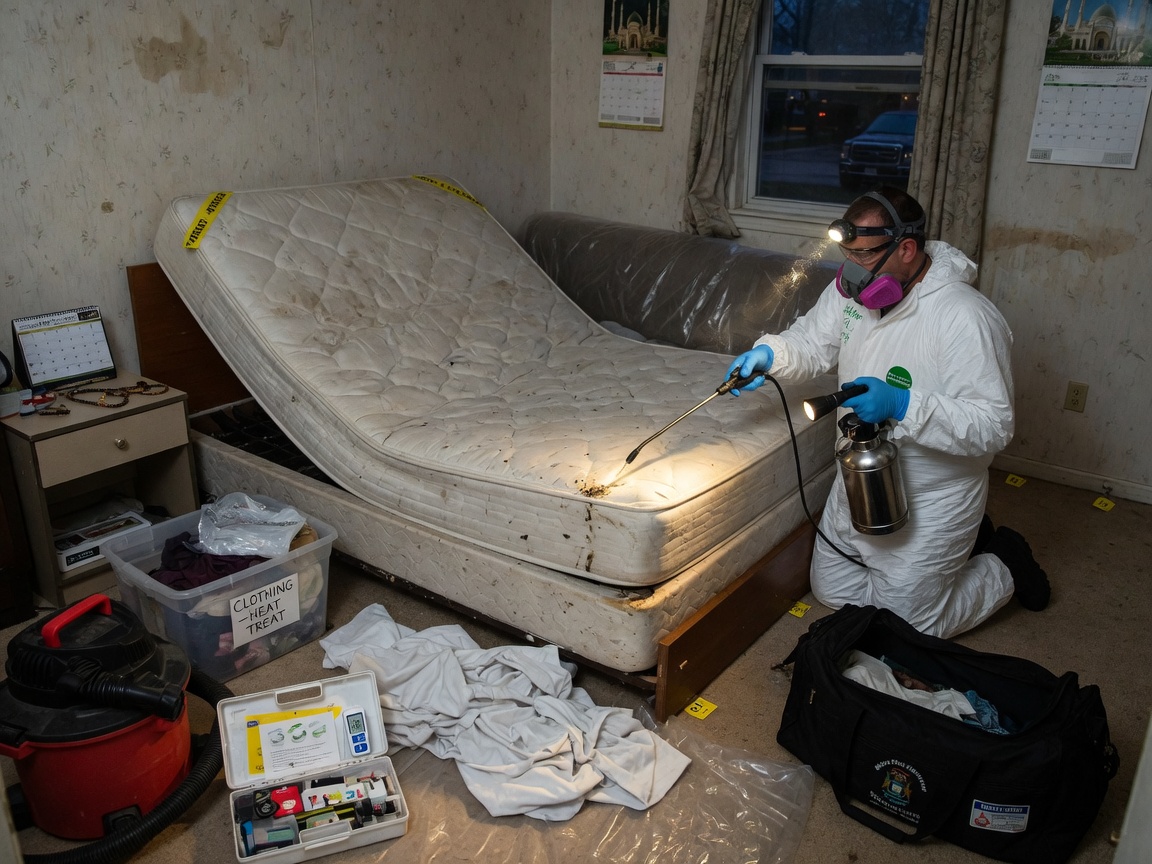
Dearborn's housing stock includes many pre-1950 single-family homes and two-flats in West Dearborn and East Dearborn that feature plaster walls, hardwood floors, and limited access points behind baseboards. Bed bugs exploit these gaps and travel easily between units in multi-family buildings common near the Arab American National Museum and along Warren Avenue. Humid continental summers accelerate breeding while cold winters drive the insects deeper into heated interiors, requiring technicians to treat both visible harborages and hidden voids without relying on surface sprays alone.
Standard protocols begin with a detailed inspection using interceptors and canine detection where needed, followed by targeted heat applications that reach 120 degrees Fahrenheit throughout the structure. In Fordson and near The Henry Ford properties, older electrical systems limit the use of multiple heaters, so crews often combine steam, vacuuming, and residual dusts applied to cracks. Follow-up visits scheduled 10 to 14 days later confirm elimination before any encasements or furniture disposal recommendations are finalized.
Residents in Taylor and Detroit-adjacent sections of Dearborn frequently report bites after travel or secondhand furniture purchases. Treatments must account for these introduction points by inspecting luggage zones and laundry areas first. All work occurs without requiring residents to leave the property for extended periods when heat methods are used, though clutter reduction remains essential for reaching every seam and joint.
Technician insight
In Dearborn the thing that catches most people out with bed bug work is the plaster-and-lath construction in West Dearborn and Fordson homes; once bugs get behind the walls the cold winters push them deeper into the living spaces, so a single spray never reaches them without pulling trim or using heat that penetrates those voids.
Fordson Two-Flat Infestation
A tenant in a 1920s two-flat near Fordson reported bites after receiving used furniture. Inspection found activity in the headboard and behind baseboards on both floors. Heat treatment was applied to the affected unit while dust was placed in shared wall cavities; two follow-up inspections confirmed no further activity and the adjacent unit remained clear.
Bed Bug Exterminator Services Services We Offer
✓Heat Treatment for Bed Bugs
Whole-room or whole-structure heat applications that penetrate furniture and wall voids common in Dearborn's older homes without leaving chemical residues.
✓Mattress and Box Spring Encasement
Installation of zippered, bed-bug-proof covers on all sleeping surfaces to trap existing insects and prevent new infestations in East Dearborn apartments.
✓Crack and Crevice Dust Application
Precision application of desiccant dusts into baseboards, outlets, and floor joists typical of pre-war housing stock throughout Fordson.
✓Follow-Up Inspection and Monitoring
Scheduled return visits using interceptors and visual checks to verify elimination before any warranty period begins in Wayne County homes.
✓Furniture and Clutter Removal Guidance
On-site assessment and disposal recommendations for heavily infested items that cannot be treated safely in multi-unit buildings near Greenfield Village.
Bed Bug Exterminator Services Cost in Dearborn, MI
| Service | Typical Range | What Affects It |
|---|---|---|
| Studio or single bedroom treatment | $450–$750 | Heat method; higher in multi-unit buildings with shared walls |
| Two to three bedroom home | $800–$1,400 | Includes encasements and two follow-ups; price rises with clutter |
| Apartment unit treatment | $350–$600 | Access to adjacent units often required in East Dearborn complexes |
| Additional follow-up visit | $150–$250 | Only if activity persists beyond standard two visits |
Ranges are typical for Dearborn, MI and confirmed with an exact written quote before any work starts.
How it works
- 1
Detailed Inspection
Technicians examine beds, furniture, and wall voids room by room, placing monitors in high-traffic areas of West Dearborn homes.
- 2
Treatment Selection
Heat, steam, or targeted dusts are chosen based on building age, electrical capacity, and resident preferences.
- 3
Application And Containment
Infested zones receive treatment while encasements are installed and clutter is reduced to limit spread.
- 4
Follow-Up Verification
Return visits confirm no live activity before clearing the property for normal use.
Pricing
Pricing varies by square footage, infestation severity, and whether heat or conventional methods are selected.