
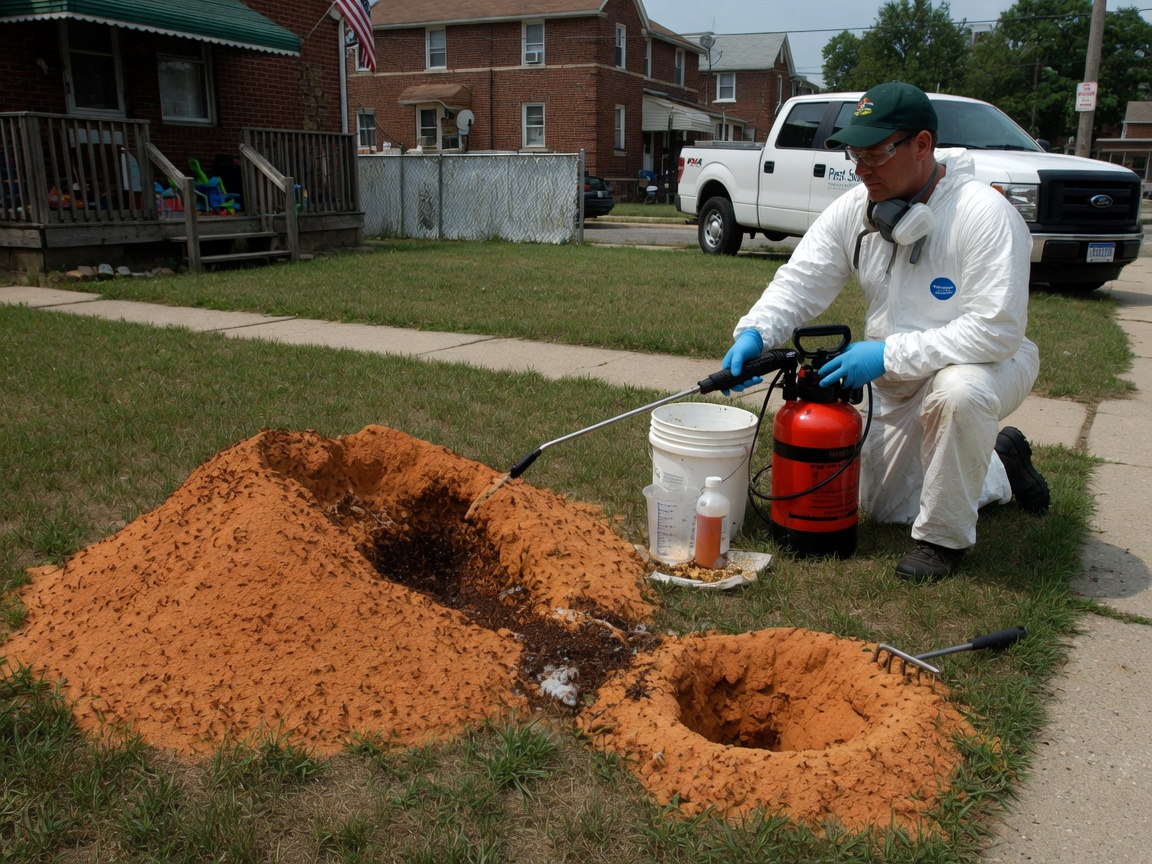
Dearborn's humid continental climate brings warm summers that trigger fire ant foraging in Wayne County yards, especially around older brick and frame homes in Fordson and East Dearborn where soil stays moist near foundations. Treatment starts with locating active mounds, often hidden under mulch or along driveways, then applying targeted baits that workers carry back to the queen. Cold winters reduce outdoor pressure but can push survivors into crawl spaces or near utility lines, requiring indoor follow-up in homes built before the 1960s.
Proximity to Detroit and Taylor means occasional hitchhiker colonies arrive in landscaping materials or vehicles, creating isolated hot spots that standard perimeter sprays miss. We use gel baits and mound drenches suited to clay-heavy Wayne County soils that hold moisture longer than sandy ground, avoiding runoff into storm drains near the Henry Ford complex. Homeowners often overlook satellite mounds that form after heavy rain, so a single visit rarely finishes the job.
Edge cases include properties backing up to commercial lots where ants bridge across fences, and older Fordson blocks with shared utility trenches that let colonies spread between houses. We map trails during the first visit and schedule a second treatment 7–10 days later once the queen is eliminated, preventing rebound in the warm months.
Technician insight
In Dearborn, the thing that catches most people out with Fire Ant Control is how clay soil in East Dearborn holds summer moisture and lets colonies survive the first cold snap, pushing them into older foundations along W Warren Ave corridors.
Fordson backyard colony
Homeowner noticed mounds after July rain near a shared fence. We mapped three active sites plus a satellite under the driveway. Bait and drench eliminated the queen; the second visit caught one rebound mound before it spread indoors.
Fire Ant Control Services We Offer
✓Mound Inspection and Mapping
Locates active colonies across West Dearborn and East Dearborn yards, marking satellite mounds that form after summer rains.
✓Bait Application Treatment
Places slow-acting baits that workers carry to the queen, effective in the warm summers typical of Wayne County.
✓Mound Drench Service
Applies liquid drench directly into mounds near foundations in older Fordson homes where soil retains moisture.
✓Indoor Fire Ant Follow-Up
Treats ants that move inside during cold winters, targeting entry points around utility lines in pre-1960s Dearborn housing.
✓Neighboring Property Coordination
Coordinates treatment across adjoining lots in dense East Dearborn blocks to stop colony bridging.
Fire Ant Control Cost in Dearborn, MI
| Service | Typical Range | What Affects It |
|---|---|---|
| Initial mound inspection and mapping | $75–$125 | Larger lots near Taylor border add time. |
| Full yard bait and drench treatment | $225–$375 | Multiple mounds or indoor follow-up increases cost. |
| Second visit follow-up | $125–$200 | Required when satellite colonies appear after rain. |
| Indoor entry point treatment | $150–$250 | Older homes in Fordson often need this add-on. |
Ranges are typical for Dearborn, MI and confirmed with an exact written quote before any work starts.
How it works
- 1
Site Assessment
Walk the property in West Dearborn or Fordson to find mounds and trails, noting soil moisture and proximity to structures.
- 2
Initial Treatment
Apply baits and drenches to active mounds, avoiding runoff near storm drains common in Wayne County.
- 3
Follow-Up Visit
Return in 7–10 days to treat any new activity after the queen is eliminated.
- 4
Prevention Check
Inspect for entry points and recommend sealing steps suited to older Dearborn foundations.
Pricing
Upfront quotes after on-site inspection; ranges reflect typical Dearborn lot sizes and mound counts.