
2026-09-17 · Sarah Kovach
How To Identify Carpenter Ant Damage In Older Dearborn Neighborhoods
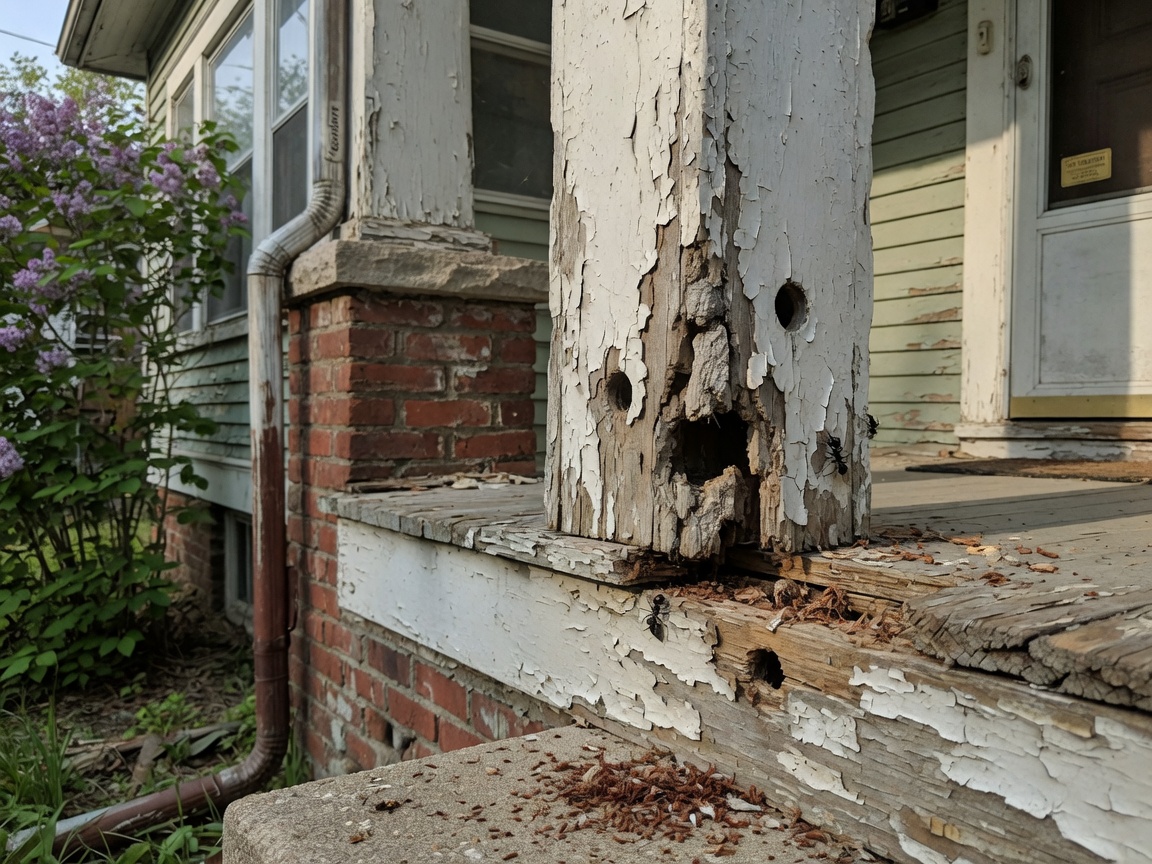
Carpenter ant damage in older Dearborn neighborhoods shows as smooth, excavated galleries inside structural wood without any sawdust piles, typically along moisture-prone sills and joists in homes built before 1960. These ants prefer decaying or damp wood found in West Dearborn and East Dearborn properties near the Henry Ford Museum and Greenfield Village, where humid continental winters push colonies toward heated interiors.
Recognizing Gallery Patterns in Pre-1960 Construction
Older homes in Fordson and West Dearborn often feature balloon framing and original pine or oak joists that retain moisture from spring thaws and summer humidity. Carpenter ants create 1/8-inch wide tunnels with a sanded appearance and no frass, unlike the rough, dirt-filled galleries of termites. Check baseboards, window sills, and attic rafters for these clean excavations, especially where roof leaks or poor drainage have softened the wood over decades. In Wayne County, many East Dearborn structures from the 1920s–1940s show repeated activity along south-facing walls that warm quickly in summer.
Listen for faint rustling sounds inside walls during warm evenings when workers forage. Frass may appear as coarse wood shavings mixed with insect parts near entry points, though it is often removed by the colony itself. Homeowners in Taylor and Detroit border areas report similar patterns after heavy snowmelt saturates foundations.
How Dearborn Winters and Summers Drive Activity
The region's cold snowy winters force carpenter ants to seek warmth inside older Dearborn homes, concentrating damage near heating ducts and kitchen voids. Once temperatures rise above freezing, colonies expand into warm summer wood that stays damp from frequent thunderstorms. This cycle repeats in East Dearborn neighborhoods where mature trees drop leaves that trap moisture against siding. Inspect during late winter for new satellite nests in wall voids, then again after July rains when foragers become visible on exterior trim.
Unlike mice that enter once winter temperatures drop, carpenter ants remain active year-round indoors when outdoor conditions stay below 50 degrees. Properties near the Arab American National Museum often sit on clay-heavy soil that holds water, increasing the risk of wood softening that attracts nesting.
Distinguishing From Termite or Carpenter Bee Damage
Termite damage leaves mud tubes and hollow-sounding wood, while carpenter bees produce larger 1/2-inch entry holes with yellow pollen residue. In Dearborn's older stock, carpenter ants leave consistent 3/8-inch wide smooth paths that follow the grain without crossing it. Tap suspect timbers with a screwdriver handle; a dull thud indicates hollowing, but only professional inspection confirms the species. Link to ant exterminator services when multiple trails appear near the foundation.
Compare findings against nearby West Dearborn homes where similar construction ages produce identical gallery shapes. Avoid confusing these with the larger, round holes of carpenter bees that target fascia boards rather than structural joists.
Practical Inspection Steps for Local Homeowners
Begin at the exterior foundation during daylight, looking for 1/4-inch wide trails on siding and porch posts. Move inside to basements and crawl spaces, shining a flashlight along sill plates for clean excavations. Use a thin screwdriver to probe soft spots without creating new damage. Document locations with photos and note any winged ants near windows in spring. Schedule checks after heavy snow or rain when moisture levels peak.